The Curator

A museum with three million rooms and no map.

That's the AI landscape right now. New models every week. New tools every day. Breathless announcements from people trying to sell you something.

I walk you past the obvious and stop you in front of the two or three things that actually matter for your firm.

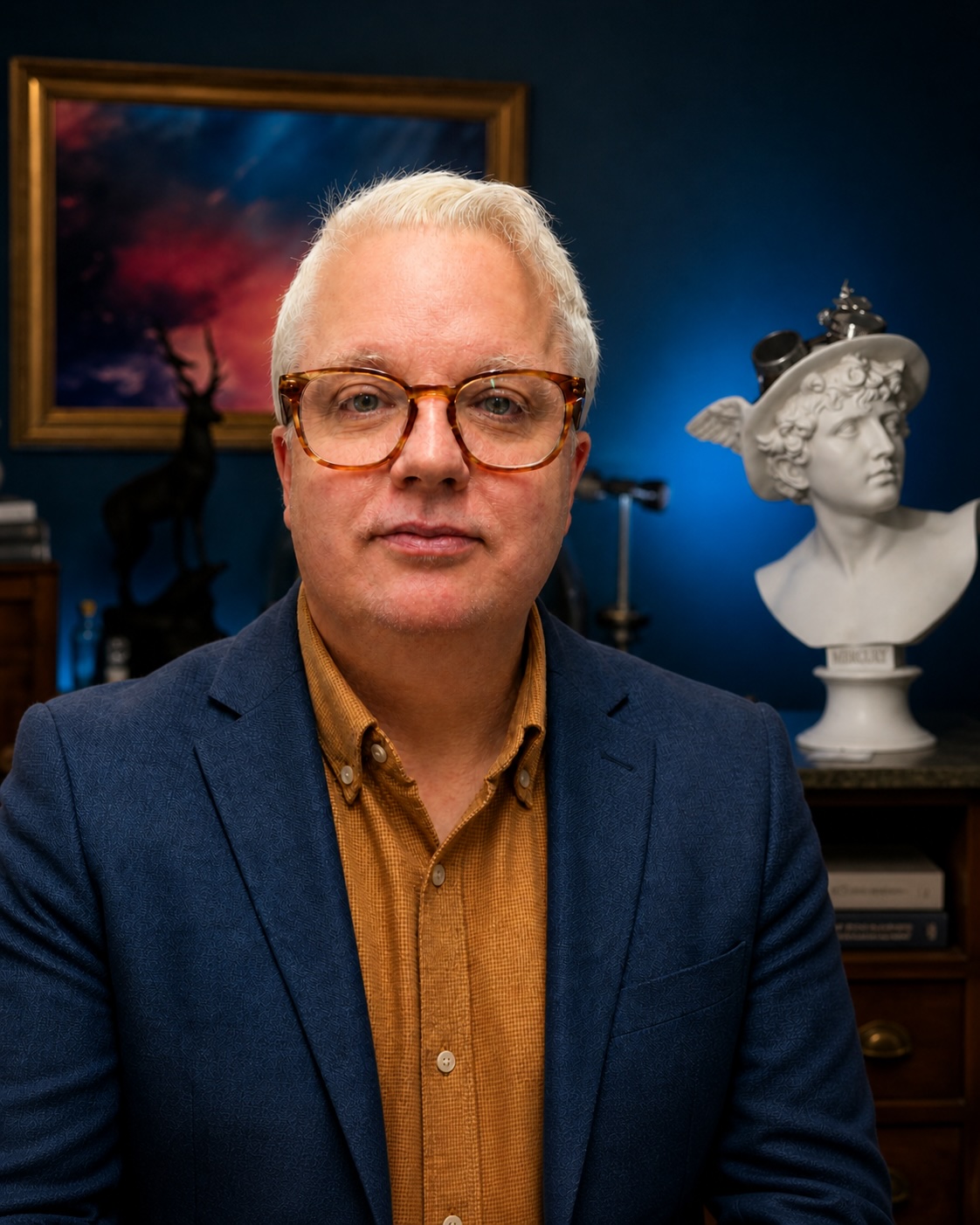
Rob Abbey — Founder, Mercurious.ai

Trusted AI Curator

Rob Abbey

A good curator doesn't overwhelm you. Of the three million rooms, a handful hold something your firm needs right now. My job is to find them, show you what's inside, and give you a straight answer about the rest.

Understanding comes first. AI is still new enough to be intimidating, and intimidating enough to be avoided. My first job is to change that: to work through what AI can and cannot do for your specific business until everyone in the room can see it clearly. The solutions that stick are the ones the team helped to shape.

The Road Here

I've been wired this way for a long time.

In the 1990s, at the Dublin Institute of Technology's College of Marketing and Design, I wrote my thesis on marketing on the World Wide Web. It was called Marketing on the World Wide Web: Building a Paradigm for Web Based Commerce. The college told me the internet would never take off, that it would go the way of the French Minitel. I submitted it anyway. Around the same time I was tinkering with rudimentary IVR software, convinced that talking to computers would one day be normal. It took about thirty years longer than I expected, but here we are.

Then a decade in US technology. The first six years at ClickFunnels, one of the most successful bootstrapped business automation platforms of its era, where I joined as part of the small initial team and watched users grow from 6,500 to over 100,000. Sales and marketing automation first, then AI automation.

The second half went deep, at Respage: chatbots, voicebots, prediction models, an AI-first CRM, and an NLP-to-LLM migration, inside a business with $10M+ ARR. The products I ran were used by thousands of people across hundreds of companies and thousands of offices. Real consequences when they break.

I left that world deliberately, to build something more considered: an independent practice for firms like yours.

Here's what that experience means in practice:

  • 10+ years building sales and marketing automation and AI products at commercial scale
  • Principal AI Product Manager at a $10M+ ARR company, scaling an AI product from 1 location to 200+ locations with hundreds of users inside a single organisation
  • Certified to run AI Design Sprints® for Products & Services, Process, and Generative AI by 33A.ai, an internationally recognised AI innovation firm
  • Certified in AI Product Management, Product School
  • Trained in agentic AI development and Agentic Doc Gen with Tyler Fisk and Sara Davison, AI Build Lab
  • BSc in Management, Trinity College Dublin. Higher Diploma in Marketing, TU Dublin
  • Creator of the AI Archetypes framework and The Cabinet of AI Curiosities
  • Based in Athlone, County Westmeath, working remote-first since 2014
Why Mercurious?

Mercury × Curious

Mercury was the Roman god of commerce, communication, and speed, the one the other gods sent when a task demanded both pace and intelligence. If the Romans had known about AI, Mercury would have been the god they gave it to.

Mercurious is Mercury merged with curious, because the most important thing you bring to AI isn't technical knowledge. It's the willingness to stay curious about what it can and cannot do.

Together they describe what this work demands: moving fast, staying curious, in an industry that moves faster than almost anything before it. Keeping pace with it is my job, not yours.

Mercury, archetypes, a Cabinet of Curiosities. None of it is accidental. AI is full of jargon built to impress rather than explain, and the old names put the explaining back.

I'm not a developer, I'm an orchestrator. I design AI products, build automations, and coordinate the people and strategy to make them work. That includes knowing when AI shouldn't be involved at all: when the task needs a human, the decision needs a leader, or the moment simply isn't right.

For your business, that means someone who designs the right solution, involves your team, and knows when to say not yet.

How I Work

I arrive with an open mind, ten years of knowing which questions matter, and the frameworks to act on what I find.

People support what they help to create.

This isn't a motivational poster. AI projects tend to fail the same way: the leadership approves, a system arrives, and the people who had to use it every day were never in the room. Nothing changes. The projects that work solve a specific pain inside a real workflow, with those people helping to shape the solution.

The Socratic method, not the slide deck.

Every organisation already holds most of the knowledge needed to solve its own problems. The people on the ground know where the friction is. They know what takes too long, and what falls through the cracks every single week. They're the ones pushing the same boulder up the same hill every day, doing the repetitive task nobody has ever questioned, because that's just how it's done. They know exactly where the work catches. They've just never been asked. Whether AI belongs in any of those places is the question we answer together.

Build for now, not for later.

A fleet doing real work this quarter is worth more than a comprehensive AI strategy nobody implements. Build with what exists right now. It's already enough.

The technology gets cheaper as it gets better.

That's been the pattern for years now, across the models, the approaches, and the options, and I see no reason it stops. It's one more argument for building only what earns its place today and leaving the rest until it gets better, or until we want to upgrade. Nothing about this field rewards rushing.

The job question is in the room, even when nobody says it out loud.

"The best way I know to take the fear away is to involve people in building the solution themselves. When you've helped design it, when your knowledge is baked into it, when it reflects your workflows and your language — it doesn't feel like a threat. It feels like a tool you made. Because it is."

What gets counted is the work, never the people. The work in question is the kind that never reaches an invoice: the drafting, the reformatting, the chasing, the follow-up nobody logged. What comes back is hours, and people returned to the work they're actually paid for.

Don't take my word for it

What former colleagues say

Mercurious is a new practice, so these are labelled honestly: former colleagues, not clients. Here's what the people who worked alongside me for years say about how I think, build, and lead.

"Rob worked closely with some of our largest clients to understand their needs and ensured that the product delivered real, measurable value. His ability to deliver results made a huge impact on our team and company. I would absolutely work with him again without hesitation."
Wayne Steiner
CTO, 4 Walls — managed Rob directly
"Working with Rob at Respage was an absolute pleasure. His openness made it possible for us to work closely with key customers and turn trials into long-term adoption. Every product he builds is thoughtfully constructed to last, with the customer's best interest at the centre."
Melanie Gibson
Sales & Account Management, Respage
"We shipped more than 10 products and big features together. What stands out about Rob is how he mixes deep product knowledge with empathy and calm leadership. He listens, asks the right questions, and really gets the technical side — which makes working with him easy and effective."
Agustín Griguol
Technical Lead, Full Stack Engineer — reported to Rob

Client results will be published here as they're ready to share. Until then, the Fleet Log shows the same system working inside Mercurious every week.

AI is everywhere. Clarity is rare.

Let's make it specific to you.

If you want to know whether any of this applies to your firm, the shortest route is an hour of my honest opinion. One conversation, your actual situation, and a plain answer, with a one-page written summary within 48 hours that's yours to keep. Including "not yet", if that turns out to be the honest one.

Book your AI Orientation — €450
See the Fleet Log